Cost: 1500.00 BDT
1500.00 BDT
Course Features
Lectures: 4
Duration: 8 Hours
Skill Level: All
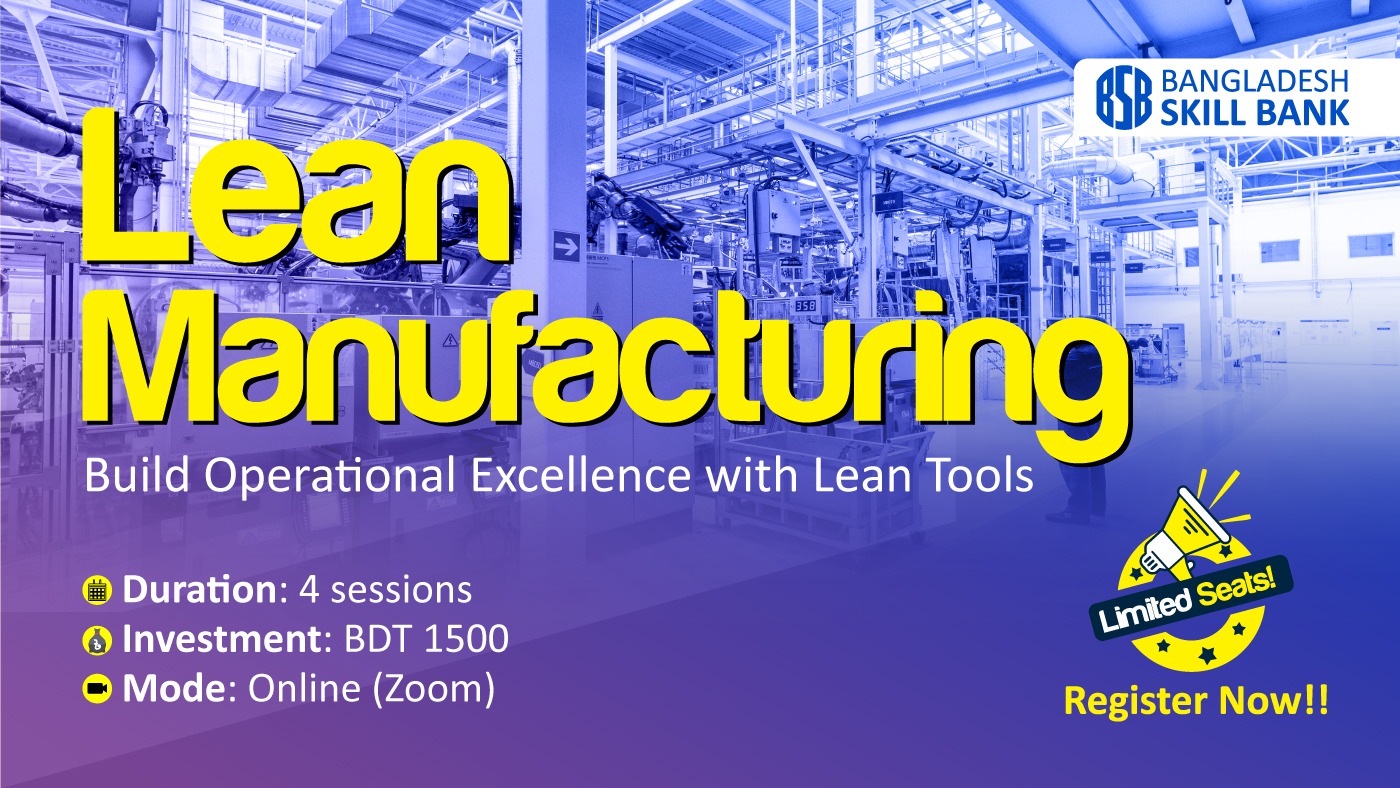
Lean
Manufacturing
Mode: Online (zoom)| Duration: 4 sessions| Investment:
BDT 1,500
This Lean Manufacturing course is designed to equip
professionals with the knowledge and tools to improve efficiency, eliminate
waste and deliver greater value across manufacturing operations. Rooted in the
principles of the Toyota Production System the course offers a practical,
hands-on approach to streamlining processes and building a culture of
continuous improvement.
Participants will gain insights into core lean concepts such
as waste identification, flow optimization, root cause analysis and process
standardization — all aimed at boosting productivity and quality while reducing costs. The course combines real-world examples, industry best practices and
interactive learning to help learners apply lean thinking in their own work
environments.
Whether you’re an engineer, manager, supervisor, or aspiring
professional, this course will help you drive operational excellence and make
meaningful improvements across your organization.
Contents
🟧 Session 1: Lean
Foundations & Flow – Understanding the Basics
Title: “Lean Thinking & The Foundation of Flow”
Topics Covered:
Background of Lean
Push vs Pull Supply Chain
Just in Time (JIT)
Performance Metrics
Standardization
Value Added vs Non-Value Added Work
Introduction to Toyota House
🟦 Session 2: Mapping,
Analyzing & Improving the Process
Title: “Seeing the Waste, Mapping the Value”
Topics Covered:
Waste Study (7 Wastes)
Value Stream Mapping (VSM)
Root Cause Analysis (5 Why, Fishbone)
Single Piece Flow
Kanban
Kaizen (Continuous Improvement)
🟧 Session 3: Building
Quality & Speed into the System
Title: “Efficiency with Excellence: Building Robust
Processes”
Topics Covered:
Quality at the Source
Visual Systems
Poka-Yoke (Mistake Proofing)
Cycle Time Reduction
Single Minute Exchange of Die (SMED)
Total Productive Maintenance (TPM)
5S (Sort, Set, Shine, Standardize, Sustain)
🟥 Session 4: Beyond Lean
– Integrating Six Sigma for Process Excellence
Title: “From Lean to Six Sigma: Towards Operational
Excellence”
Topics Covered:
Limitations of Lean Manufacturing
Introduction to Six Sigma
Basic DMAIC Overview (Define, Measure, Analyze, Improve,
Control)
Lean vs Six Sigma – Synergies
When to Use What – Real World Examples
Course
details
Starts from: 2 May, 2026
Time: 8:00 PM – 10:00 PM
Mode: Online via Zoom
Investment: Just BDT 1,500
Who should Attend
No curriculum available.
Mode: Online (zoom)| Duration: 4 sessions| Investment:
BDT 1,500
This course provides a comprehensive understanding of Lean
Manufacturing principles and practices aimed at enhancing operational
efficiency and eliminating waste. Participants will explore how to streamline
processes, improve quality and maximize value through a variety of proven
tools and methodologies. Through practical examples, analytical tools and
interactive sessions learners will develop the skills to identify
inefficiencies, implement continuous improvement strategies and align
operations with customer demand. The course also addresses key performance
metrics, systematic problem-solving approaches and modern production systems
inspired by industry leaders. By the end of the course participants will be
equipped to apply lean thinking in real-world manufacturing environments, drive
measurable improvements and support a culture of excellence and continuous
innovation.